Most golfers spend hours working on the swing and no time at all on the body that has to make it. A small amount of regular movement work can change how easy the swing feels. This guide shares a simple routine you can do at home, with no special equipment. It is general advice for healthy adults, not a personal programme. If you have pain, an injury or a medical condition, check with your doctor or physiotherapist before you start.
Why bother with fitness for golf?
Golf asks your body to turn, brace and move quickly while staying balanced, often after sitting at a desk all week. Common limits are stiff hips, a stiff upper back, weak glutes and a core that cannot hold a position under speed. Improving those things helps in three ways:
- Better positions. You can reach what your coach asks for.
- More power. Speed comes from good movement, not just effort.
- Less strain. A better-prepared body copes with practice and rounds more comfortably.
A five minute warm-up before you play
Do this before every round or practice session. It should leave you slightly warmer, not tired.
- Brisk walk or march on the spot: 1 to 2 minutes, to raise your heart rate.
- Arm circles: 10 forwards, 10 backwards, getting bigger each time.
- Hip swings: holding something steady, swing one leg forward and back 10 times, then the other.
- Gentle torso turns: club across your shoulders, turn left and right 10 times each way, easy and smooth.
- Half swings: 10 slow practice swings, building towards full pace.
Static stretching, where you hold a position for a long time, is better saved for after your session or for another time of day.
Mobility: moving freely
Do these slowly, and stop if anything pinches or hurts. Aim for smooth, controlled movement, not the furthest range you can force.
| Move | How to do it | Aim for |
|---|---|---|
| Open book | Lie on your side, knees bent and stacked, arms in front. Open your top arm out and back like a book, following it with your eyes. | 8 each side |
| Cat and cow | On hands and knees, round your back up, then gently arch it down. | 10 slow reps |
| Hip hinge | Stand tall, hands on hips, push your hips back with a flat back, then stand tall again. | 10 reps |
| 90/90 hip rotation | Sit with both knees bent at right angles, and gently rotate your knees from side to side. | 8 each side |
| Wall shoulder slide | Stand with your back and arms against a wall, slide your arms up and down without arching your back. | 10 reps |
Strength: the basics that matter
You do not need heavy weights to begin. Good control of your own bodyweight is a strong foundation.
- Glute bridge. Lie on your back, knees bent, and lift your hips until your body makes a straight line from shoulders to knees. Pause, then lower. Glutes power the lower body in the swing. Try 2 sets of 10.
- Bodyweight squat. Feet shoulder width, sit your hips back and down, then stand. Keep your chest up and your knees in line with your toes. Try 2 sets of 10.
- Bird dog. On hands and knees, reach one arm and the opposite leg out, hold for a couple of seconds, then swap. This trains the core to stay steady while limbs move. Try 2 sets of 8 each side.
- Side plank. On your forearm and the side of your foot (or knees to start), lift your hips and hold. Try 2 holds of 15 to 30 seconds each side.
- Standing band or cable row. If you have a resistance band, pull it towards your ribs with your shoulder blades back and down. Try 2 sets of 10.
A simple weekly plan
- Day 1: mobility moves from the table, then glute bridges, squats and bird dogs.
- Day 2: a normal day, with a walk if you can.
- Day 3: mobility moves, then side planks and rows.
- Day 4: rest, or practice at the range.
- Day 5: repeat day 1, adding one more set if it feels comfortable.
- Weekend: play or practise, with the five minute warm-up first.
Twenty minutes, two or three times a week, is plenty. Consistency matters much more than intensity, so start easy and build gradually over several weeks.
Common mistakes
- Doing too much too soon. Sore for days means you overdid it.
- Chasing flexibility everywhere. Some joints need stability, not more range. Stiff is not always the problem.
- Copying a pro's routine. A professional's programme is built for their body and goals, not yours.
- Ignoring pain. Discomfort from effort is normal, sharp or lingering pain is not.
- Skipping the warm-up. It is the cheapest injury insurance there is.
When a general routine is not enough
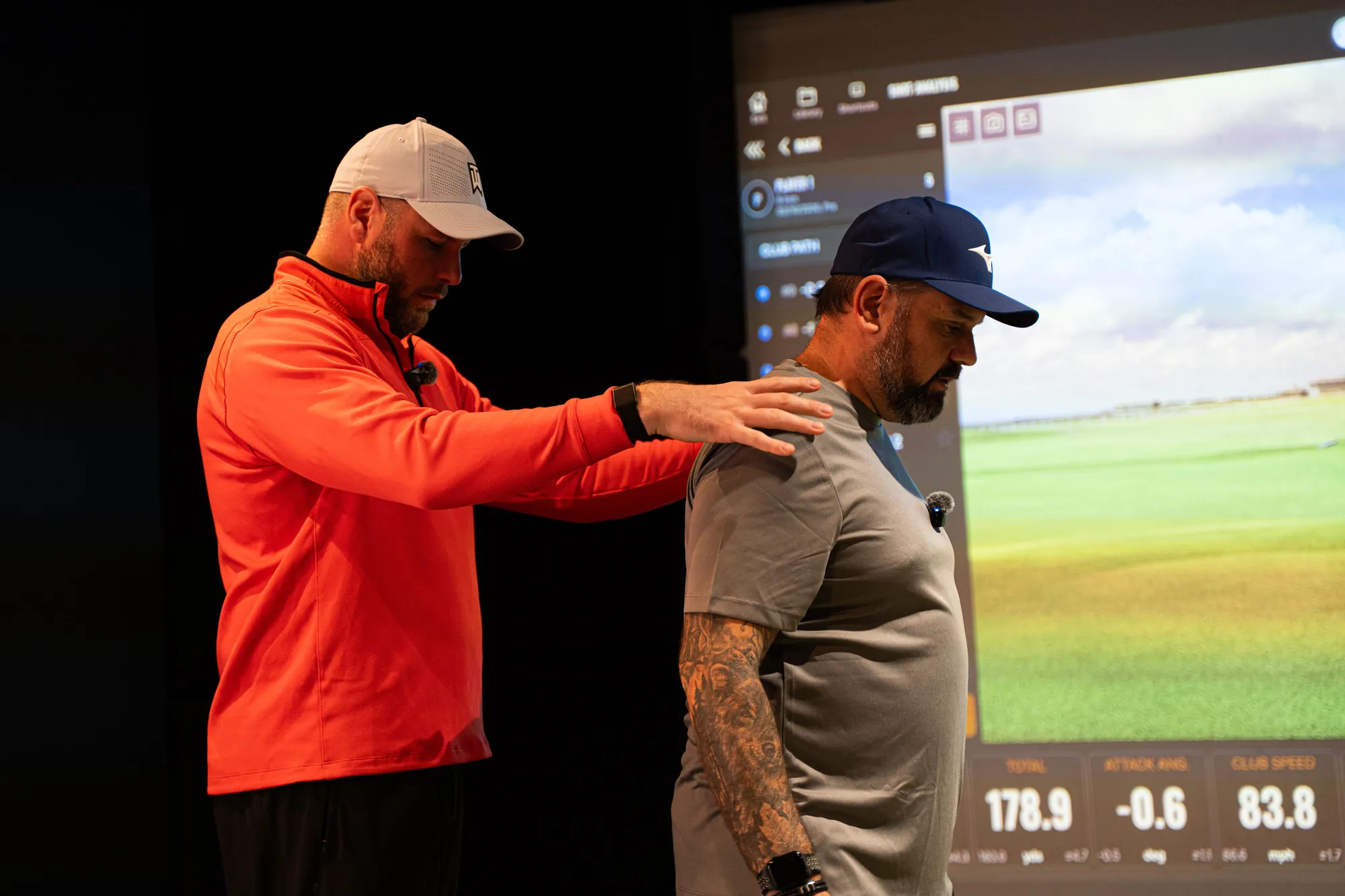
A routine like this is a good start, but everybody's body is different. The exercise that frees one golfer's hips may do nothing for another whose real limit is in the upper back. That is why a proper assessment is worth having. Our TPI movement screening shows what your body can and cannot do, and our guide to TPI explains how that connects to your swing.
From there, our golf strength and conditioning sessions build a programme around your results and your actual swing, led by our Head of Strength and Conditioning. If an injury is part of the picture, golf physiotherapy assesses and treats it, and plans your return to the course properly.
Knowing it is working
Progress shows up in small ways before it shows up on the scorecard. You may find you can turn further without effort, finish rounds with less stiffness, or hold your finish position more easily. Write a few notes each week about how your body feels and how your swing feels. After four to six weeks, look back. Those small changes add up, and they tell you whether to keep the routine, adjust it or ask a professional for something more personal.
Putting it into practice
Pick three moves from this page and do them twice this week. That is it. Once those feel easy, add more. Then book a session on the range or with a coach and notice whether your swing feels any different. You can practise at Evolution Golf Academy in Codnor, about 20 minutes from Derby and Nottingham, every day from 7am to 10pm.
Want help putting this into practice?
Book a Session