
Distance comes from four things working together: clubhead speed, how well you strike the ball, the launch angle and the amount of spin. Swinging harder is only one part, and it often makes the others worse. Finding which of the four is holding you back is the quickest way to add yards.
Quick answer: for most golfers, better contact and a better launch add more distance than extra effort. Work on the middle of the face first, then speed.
What actually makes the ball go further
Clubhead speed sets the potential. Strike quality decides how much of that speed passes to the ball. Launch angle and spin decide how well the ball travels through the air. And the roll depends on the ground and the landing angle.
Think of it as a chain. A fast swing with a poor strike wastes the speed. A good strike with the wrong launch wastes the strike. You get the most when every link is working.
| Factor | What it does | What to work on |
|---|---|---|
| Clubhead speed | Sets the potential distance. | Rotation, sequence and balance. |
| Smash factor | Shows how well speed is passed to the ball. | Centre strikes and a square face. |
| Launch angle | Decides how high the ball takes off. | Tee height and ball position. |
| Spin rate | Controls how long the ball stays in the air. | Not too much, not too little. |
| Attack angle | Up or down into the ball. | Slightly upwards with the driver. |
Clubhead speed
Speed is the engine. Most golfers can improve it through better sequencing, good balance and a body that can rotate freely. Strength helps, but timing and mobility matter just as much.
- Rotation. A body that turns freely lets the club travel on a bigger arc, which adds speed without extra effort.
- Sequence. The lower body starts the downswing, then the chest, then the arms, and the club releases last.
- Balance. If you fall back or lunge, you lose speed and strike quality. Try to finish in balance every time.
Gripping the club tightly is a quiet speed thief. A relaxed grip lets the wrists hinge and release, so the head can travel faster.
Strike quality and smash factor
Smash factor is ball speed divided by clubhead speed. It tells you how efficiently you hit the ball. For a driver, a figure close to 1.5 is about the most that is possible, and most golfers sit below it. Hitting the toe or heel, or low on the face, lowers it.
If you hit the ball at the same clubhead speed but with better contact, you will gain distance without swinging any harder. That is why strike quality is often the cheapest improvement available. A can of foot spray or some impact tape on the face shows where the ball is marking it. If the marks sit low or towards the heel, you know where to start.
Launch, spin and attack angle
The ideal launch and spin depend on your speed. A slower swing generally needs a higher launch to keep the ball in the air, while a faster swing can launch lower. Too much spin makes the ball balloon and lose distance. Too little can make it drop out of the sky.
Attack angle with the driver
Off a tee, the ball is best struck on a slightly upward path. Hitting down on a driver adds backspin and reduces launch, which costs distance. Many golfers with a downward attack angle gain yards by moving the ball a little further forward, teeing it a touch higher and setting up with slightly more tilt away from the target.
Equipment, in the right order
Shaft flex, loft and length all change launch and spin, so a driver that does not suit you can hold you back. A fitting is the sensible way to check. But equipment should come after technique and strike, because a fitted driver cannot cure a path or contact problem.
Your body sets the limit
If you cannot rotate your hips and shoulders well, there is a ceiling on the speed your swing can reach. A TPI movement screen checks how your body moves and flags what limits your swing. For golfers who want more speed, golf strength and conditioning work is designed to build it. As with any new exercise, check with a doctor or physiotherapist first if you have any concerns.
Common distance mistakes
- Swinging harder without improving the strike.
- Gripping the club too tightly.
- Hitting the driver with a downward strike.
- Chasing one long drive, instead of a longer typical drive that stays in play.
- Skipping a warm up before a round.
Warm up and tempo
A cold body swings slower and strikes worse. Five minutes of gentle movement before you hit a ball, such as arm swings, hip turns and a few slow half swings with a short club, wakes up the muscles you need. Then build up through the bag rather than starting with the driver.
Tempo matters as well. Most golfers who feel they are swinging at full speed are actually rushing the change of direction at the top, which hurts sequence and strike. A smooth backswing and a patient start to the downswing often give a faster clubhead at impact than a rushed one. Try hitting a few shots at about 80 per cent effort. Many golfers find that their contact improves and the ball goes as far, or further, than it does when they swing flat out.
Measure what is holding you back
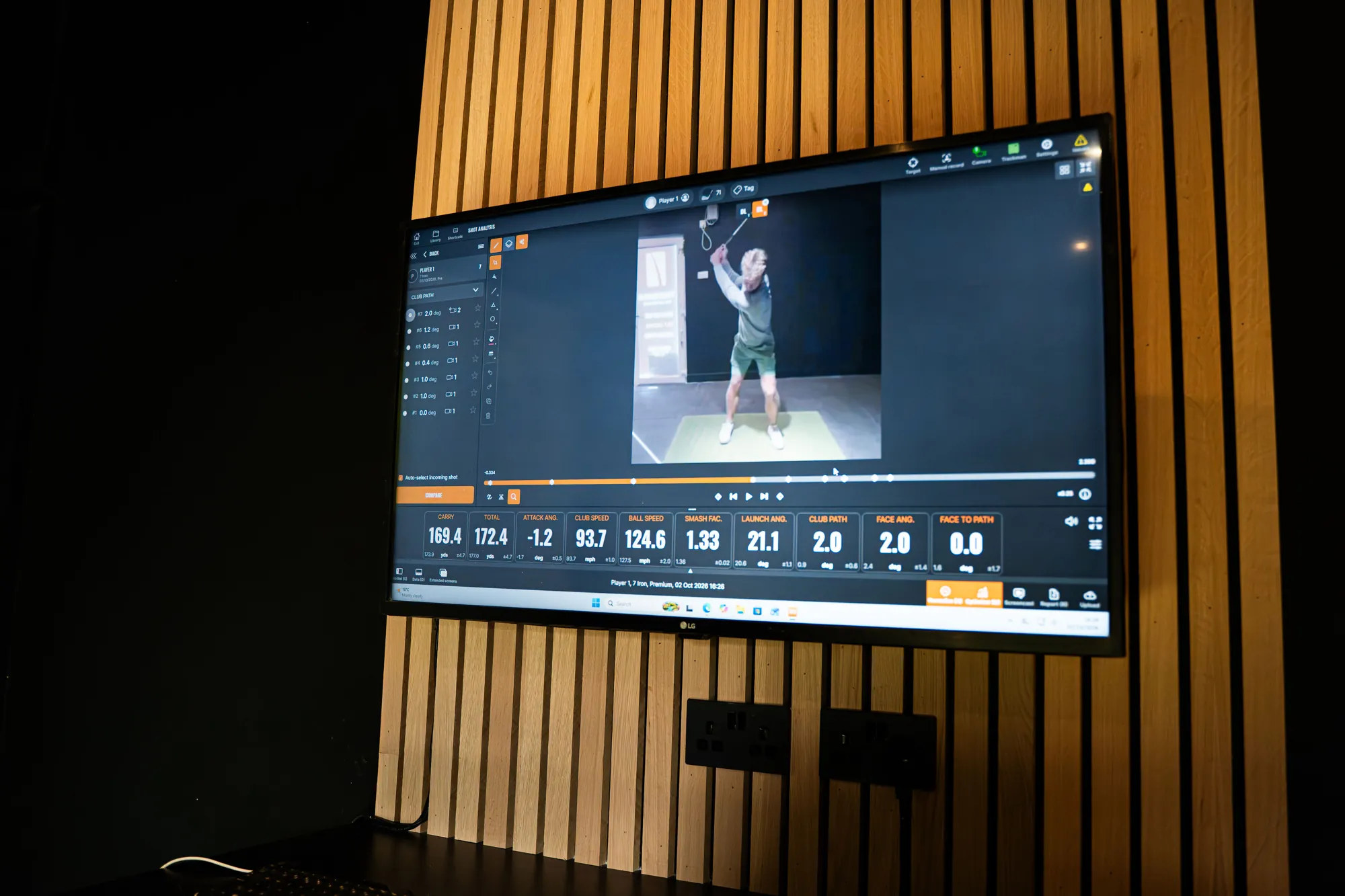
You cannot improve what you cannot see. A launch monitor shows clubhead speed, ball speed, smash factor, launch and spin on every shot, so you can see which link in the chain is weakest. Our guide to understanding your TrackMan numbers explains the main ones, and if a curve is costing you distance, read how to stop slicing the golf ball.
A good test is to hit ten drives and look at the typical shot rather than the best one. Change one thing, such as tee height, and hit ten more. If the typical carry goes up and the ball stays in play, keep it.
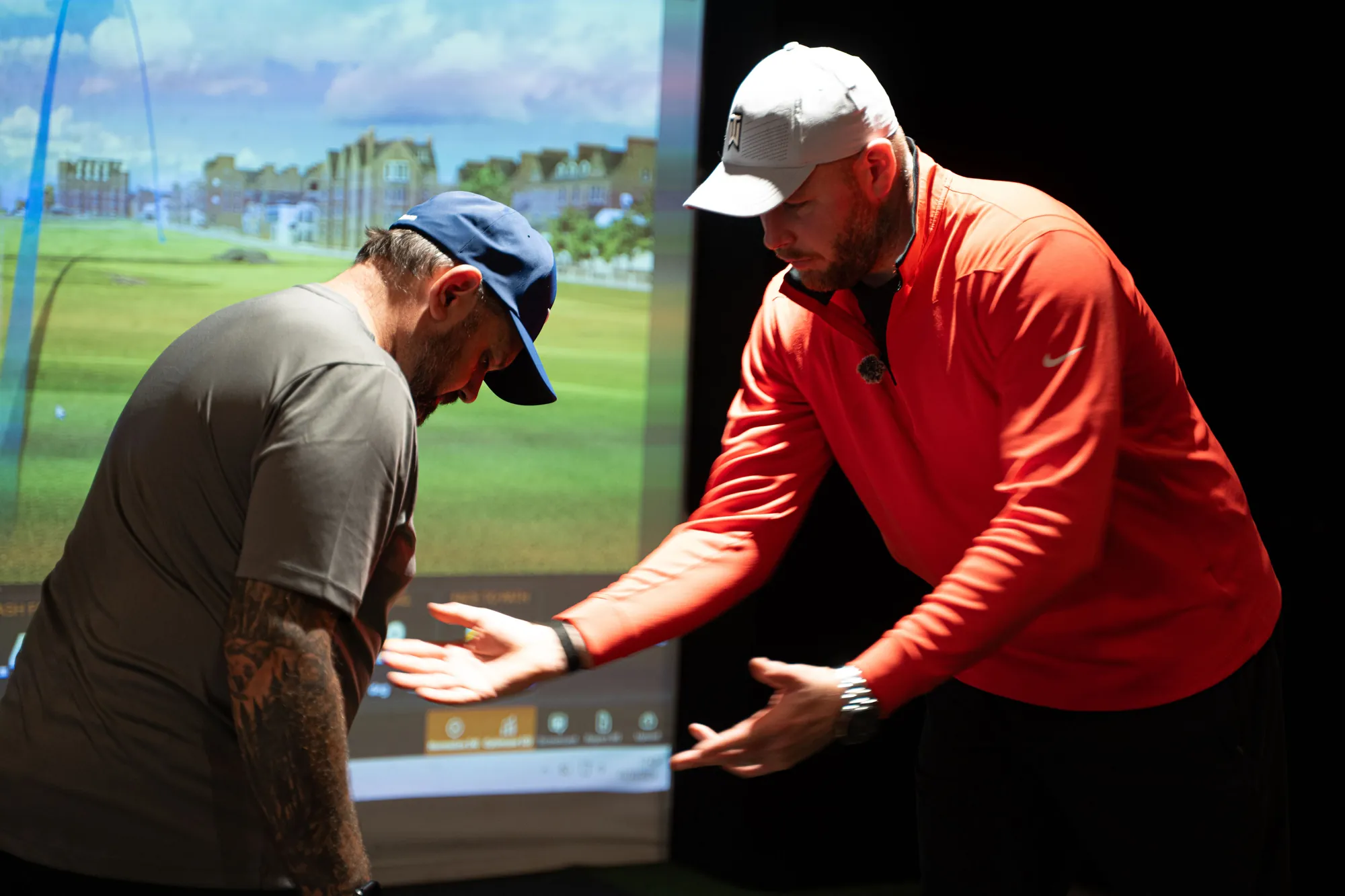
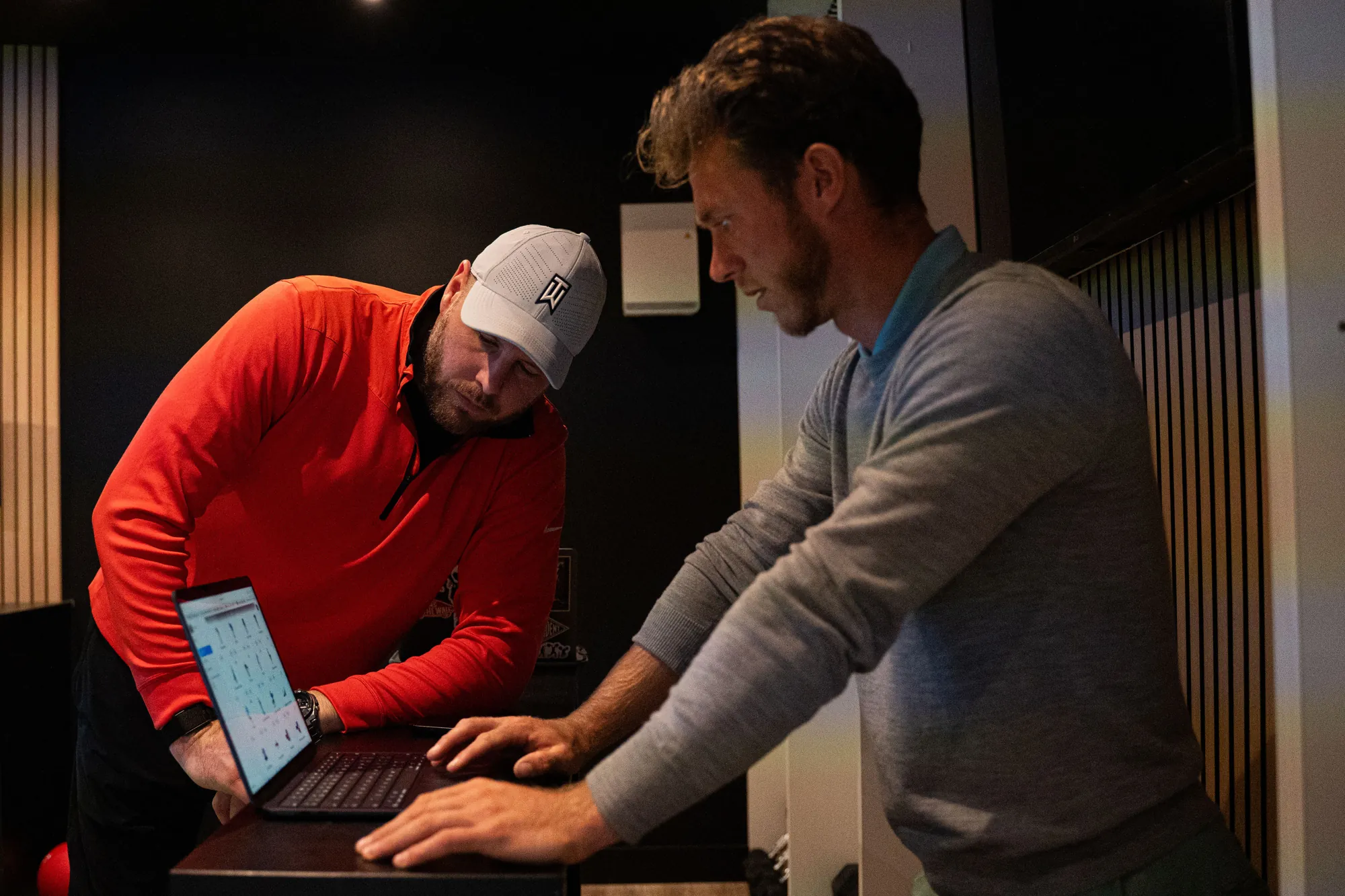
At Evolution Golf Academy, the TrackMan driving range shows these numbers in every bay, and the indoor simulators give you somewhere to practise when the weather is poor. In a one to one lesson, a PGA Professional can use that data to decide whether speed, strike or launch should come first. A lesson is £55 for 60 minutes, and our Monthly Coaching Programme is £60 a month if you want regular support.
Want help putting this into practice?
Book a Session