
TrackMan is a radar that watches your club and the golf ball, then shows you exactly what happened at impact and in flight. Radar follows the club and the ball, and software turns what it sees into numbers you can use. It sounds technical, but it is the same idea as a speed gun at a cricket match, just pointed at a golf swing.
Quick answer: TrackMan sends out a radio signal, listens to the echo from the moving club and ball, and works out speed, direction, spin and distance for every shot. Every range bay, simulator and teaching bay at Evolution Golf Academy uses it.
It is radar, the same idea as a speed gun
TrackMan is a Doppler radar. It sends out a radio signal and listens for the echo that bounces back off the moving club and ball. How that echo changes tells it how fast things are moving and in which direction. Because it keeps tracking the ball after it leaves the club, it measures the real flight rather than guessing it from the first few inches.
That matters because a guess is only as good as the information behind it. A unit that only sees the first moments after impact has to estimate where the ball ends up. A radar that follows the ball through the air can report what actually happened, including how far it carried and how high it flew.
What does TrackMan measure?
Everything on the screen falls into two groups: what the club did, and what the ball did as a result. On the club side you get club speed, attack angle, club path, face angle and dynamic loft. On the ball side you get ball speed, launch angle, spin rate, carry distance, total distance and height.
You do not need to learn all of them at once. Here is what each main number means in plain words, and how a coach uses it.
| Number | What it tells you | How a coach uses it |
|---|---|---|
| Club speed | How fast the club head was moving at impact. | Sets the ceiling for your distance and shows whether speed work is worth doing. |
| Ball speed | How fast the ball left the face. More ball speed means more distance. | Shows how much of your club speed is actually reaching the ball. |
| Smash factor | Ball speed divided by club speed. It shows how cleanly you hit the middle of the face. | A low figure points to strike quality, so the work is on contact, not power. |
| Launch angle | How steeply the ball takes off. | Checked together with spin to see whether the ball is flying too low or too high. |
| Spin rate | How fast the ball is spinning. It decides how high it flies and how it stops. | Too much or too little costs distance and control, so it guides club and technique changes. |
| Carry and total | How far it flew in the air, and how far it travelled including the roll. | Builds your real yardages for each club, which is the base of good course management. |
| Club path | The direction the club head was travelling through impact. | Combined with face angle to explain why the ball curves. |
| Face angle | Where the face was pointing at impact. This is the biggest influence on where the ball starts. | Usually the first thing to fix when the ball starts off line. |
| Attack angle | Whether the club was moving up or down into the ball. | Helps with strike and launch, for example hitting up on a driver and down on an iron. |
Why path and face matter so much
This is where the numbers beat feel. The ball starts mostly where the face is pointing, and it curves because of the gap between the face and the path. A slice, for example, is a face that is open to the path. You can feel that something is wrong, but TrackMan shows you which of the two needs to change, and by how much.
Without that information, golfers often fix the wrong thing. Someone who slices might try to swing more left, when the real issue is a face that is open at impact. Seeing the two numbers side by side takes out the guesswork. If slicing is your problem, our guide on how to stop slicing the golf ball goes into it in more detail.
How to use it without chasing numbers
A screen full of figures can be too much. The golfers who get the most out of it keep things simple.
- Pick one number. One at a time, such as face angle, carry distance or strike, rather than the whole screen.
- Know your carry for each club. Good course management starts with knowing how far each club really goes, not how far it went once.
- Look at the pattern, not one shot. A single swing can be a fluke. Five or ten shots show what you really do.
- Compare before and after. When you change something, the numbers show whether it worked.
- Combine it with video. The numbers say what happened, and the video shows why.
For a deeper walk through each figure, see our guide to understanding your TrackMan numbers.
Is TrackMan used on tour, and do I need to be good to use it?
Yes, TrackMan is used by professionals, coaches and club fitters around the world, which is why we use the same technology in our bays. But you do not need to be a good golfer to use it. It is useful at every level, because it simply shows you what the club and ball are doing. Your practice and lessons are then based on measured facts instead of feel.
A beginner can use it to see whether the ball is starting left or right of target and how far each club goes. A low handicap player can use it to fine tune spin and launch. The same screen helps both, it is just the questions that change.
Where can you use TrackMan near Derby and Nottingham?
Every bay on our driving range, the indoor simulators and the private teaching bay at Evolution Golf Academy in Codnor use TrackMan. We are about 20 minutes from Derby and Nottingham, with free on-site parking. There are seven range bays, and you can walk in with no booking needed. Baskets start at £4 for 30 balls.
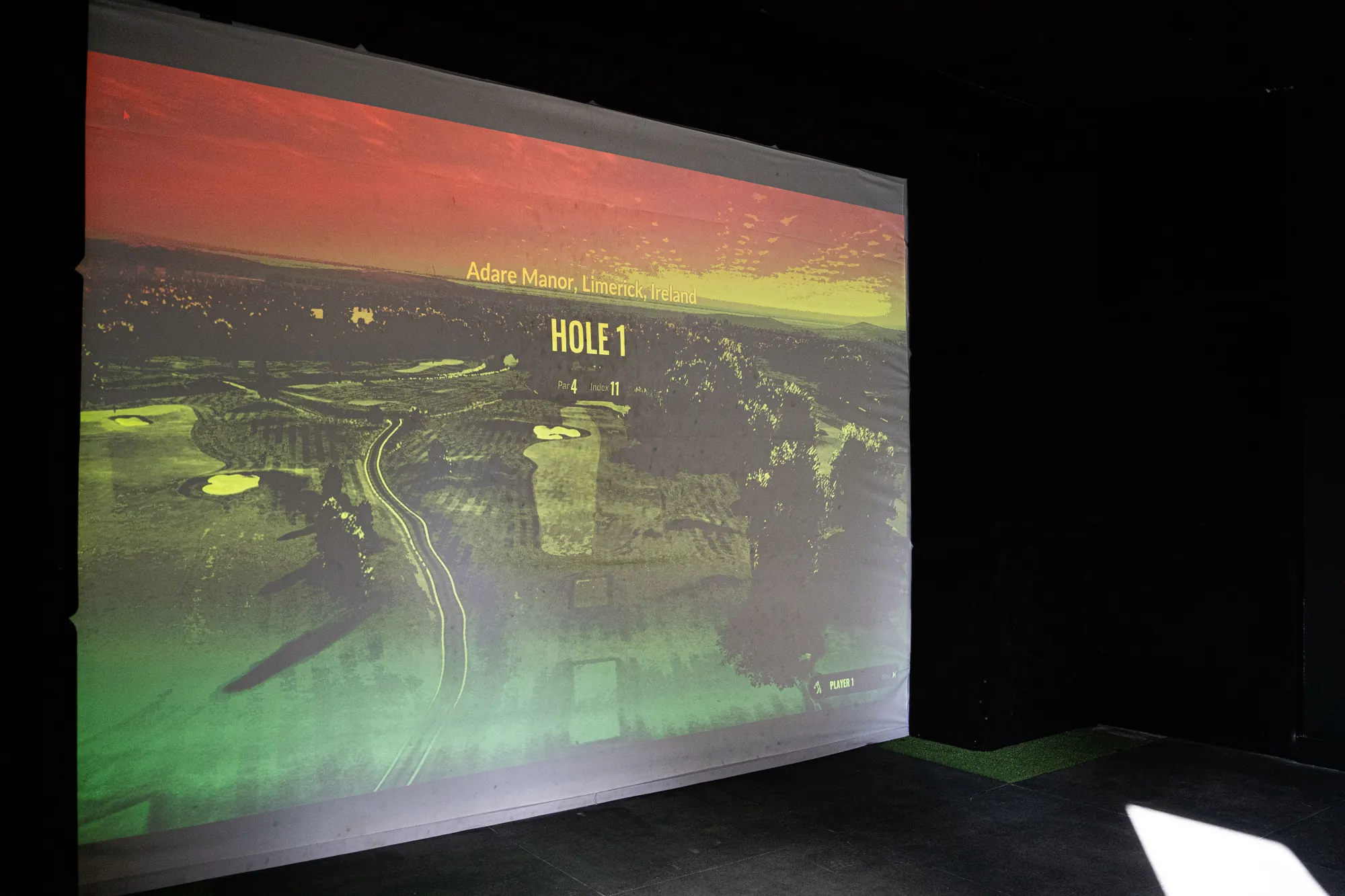
On the range you see your numbers on every shot. The simulators take up to four players, which makes them a good way to practise in a group and still see your data. Read more about the TrackMan driving range and the private TrackMan teaching bay.
How we use it at Evolution
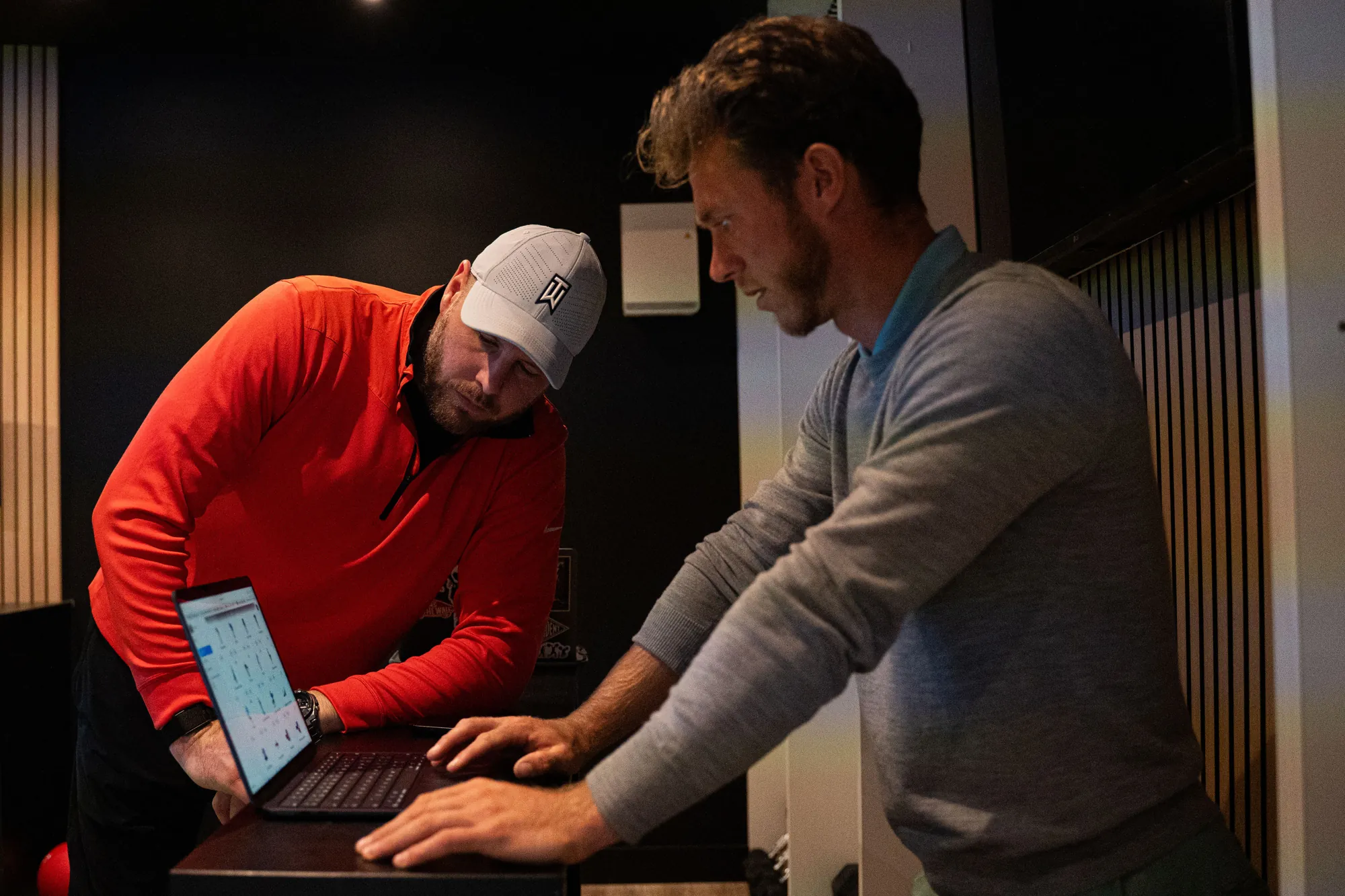
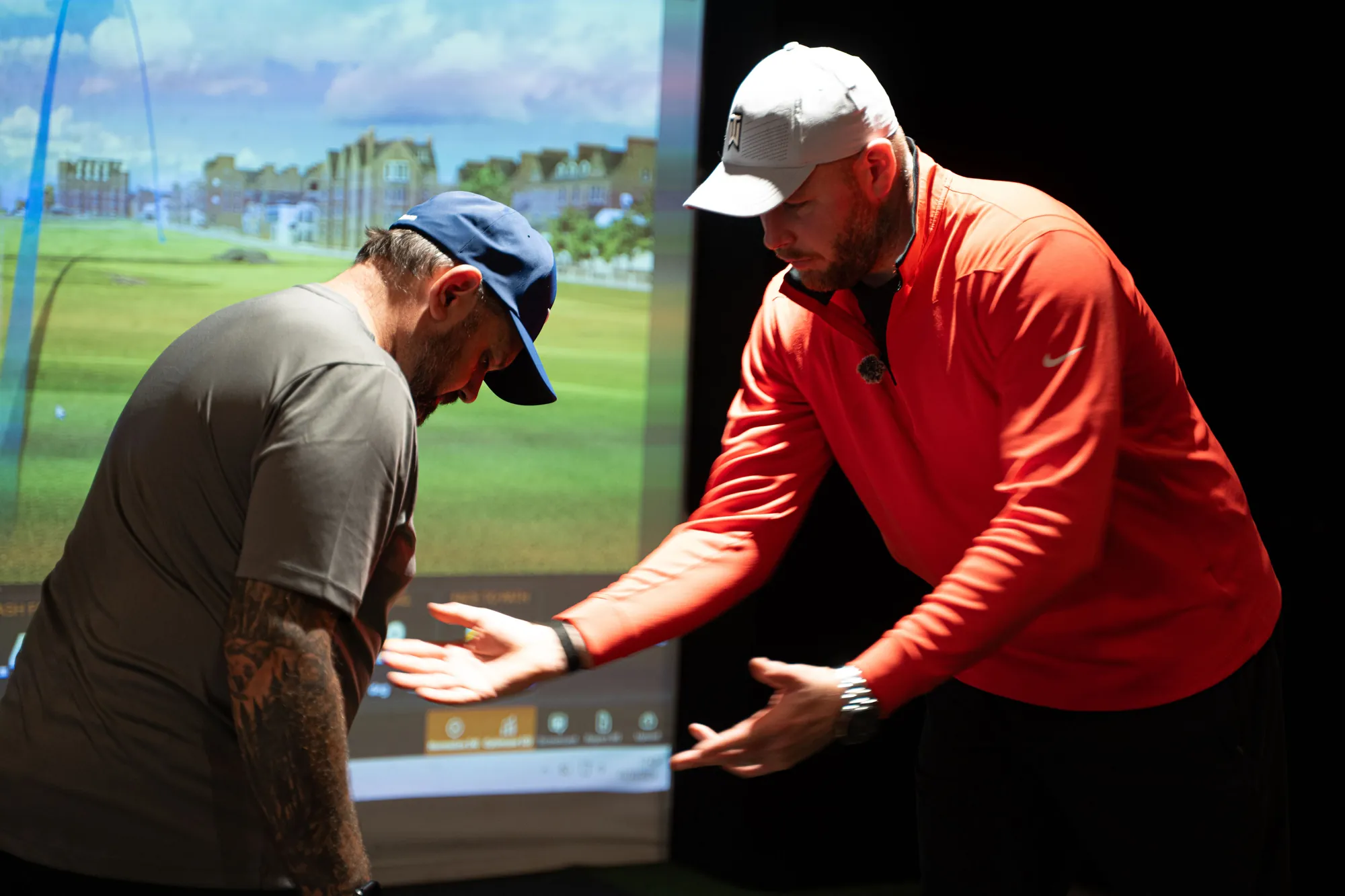
In a lesson, a PGA Professional uses the same data with video analysis to work out what to change first. A one hour golf lesson is £55, with TrackMan data and video analysis included. If a swing change never seems to stick, a TPI movement screen checks whether your body is the reason, and the plan then covers both swing and body.
If you would like to see your own numbers, you are welcome to come and hit some balls. We are open every day, 7am to 10pm. You can find us at Ormonde Fields Golf Club, Nottingham Road, Codnor, Ripley DE5 9RL.
Want help putting this into practice?
Book a Session