
When the course is frozen, waterlogged or closed, many golfers put the clubs in the garage until March. Then they spend April trying to find their swing again. The golfers who improve most are usually the ones who keep going through the cold months. This guide sets out how to do that without spending your whole winter standing in the rain.
Why winter is the best time to improve
In summer you are busy playing. Every round is a performance, so changing your swing feels risky. In winter nothing is at stake. You can make a change, hit it badly for a few weeks, and let it bed in with no scorecard to worry about. By the time the season starts, the new move is a habit.
Winter is also when your body gets a chance to catch up. A few months of mobility and strength work can make a real difference to how you turn and how you feel after a round.
A simple winter plan
| Area | What to do | How often |
|---|---|---|
| Swing | Pick one thing to change and work on it with feedback. | 1 or 2 sessions a week |
| Short game | Chipping, pitching and bunker shots to targets. | 1 session a week |
| Putting | Short putts, then pace control on longer ones. | Little and often |
| Body | Warm-up, mobility and basic strength work. | 2 or 3 short sessions a week |
| Review | Check your numbers and video, and decide what is next. | Every 4 to 6 weeks |
Practising indoors
Indoor practice has improved enormously. A simulator bay lets you hit real golf balls into a screen, see your numbers on every shot and even play a full round on a virtual course whatever the weather. It is also a social option, because up to four players can share a bay.
- Work on one number. Pick carry distance, face angle or strike quality, and watch it.
- Find your gaps. Hit ten shots with each club and write down your average carry. Many golfers discover a hole of 15 or 20 yards in their bag.
- Play a round for fun. It keeps practice from feeling like work.
Our TrackMan golf simulator bays welcome walk-ins, and you can also book a bay ahead if you prefer.
Using the range in cold weather
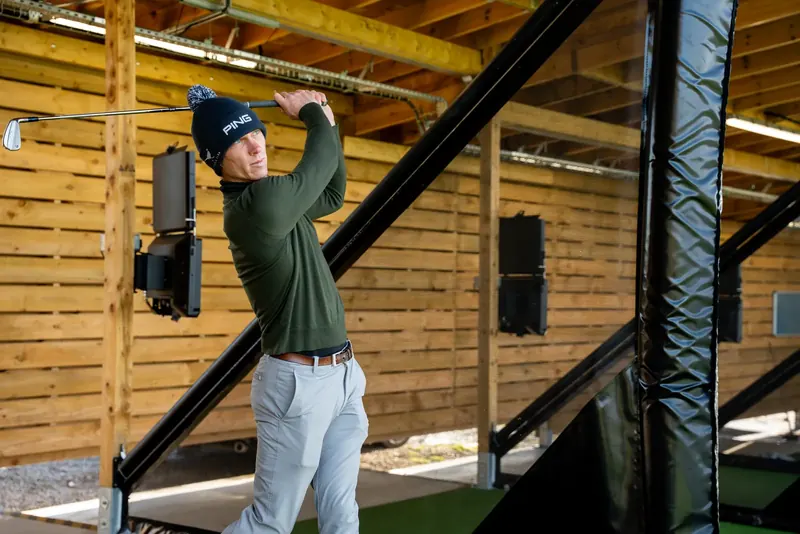
You can still hit balls outside if you are prepared. Dress in thin layers rather than one thick coat, which restricts your swing, and wear a hat and warm gloves between shots. Take a longer warm-up than you would in summer, because cold muscles are less forgiving.
Expect the ball to fly shorter in the cold, as the air is denser and the ball is firmer. That is normal and not a swing problem, so focus on strike and direction rather than distance. Our TrackMan driving range is open every day from 7am to 10pm, so you can fit practice in before or after work, and baskets start from £4. Bays can also be booked ahead, at £6 per half hour, Monday to Friday 3pm to 10pm.
Do not neglect the short game
Winter is a good time for the short game because it does not need a full swing. Around half your shots happen inside 100 yards, so the pay-off is large. Try this:
- Set up three targets at different distances and hit five chips to each, counting how many finish within a club length.
- Practise a bunker shot until you can leave the ball on the green three times in a row.
- Putt ten balls from three feet, then ten from six, and keep your score week to week.
Evolution has a short game practice area on site for exactly this.
Getting back to grass
Hitting off a mat is useful, but turf tells you things a mat does not. Mats forgive heavy strikes, while grass shows exactly where your club meets the ground. On mild winter days it is worth a visit to a grass driving range to check that your strike still holds up.
Why winter lessons work so well
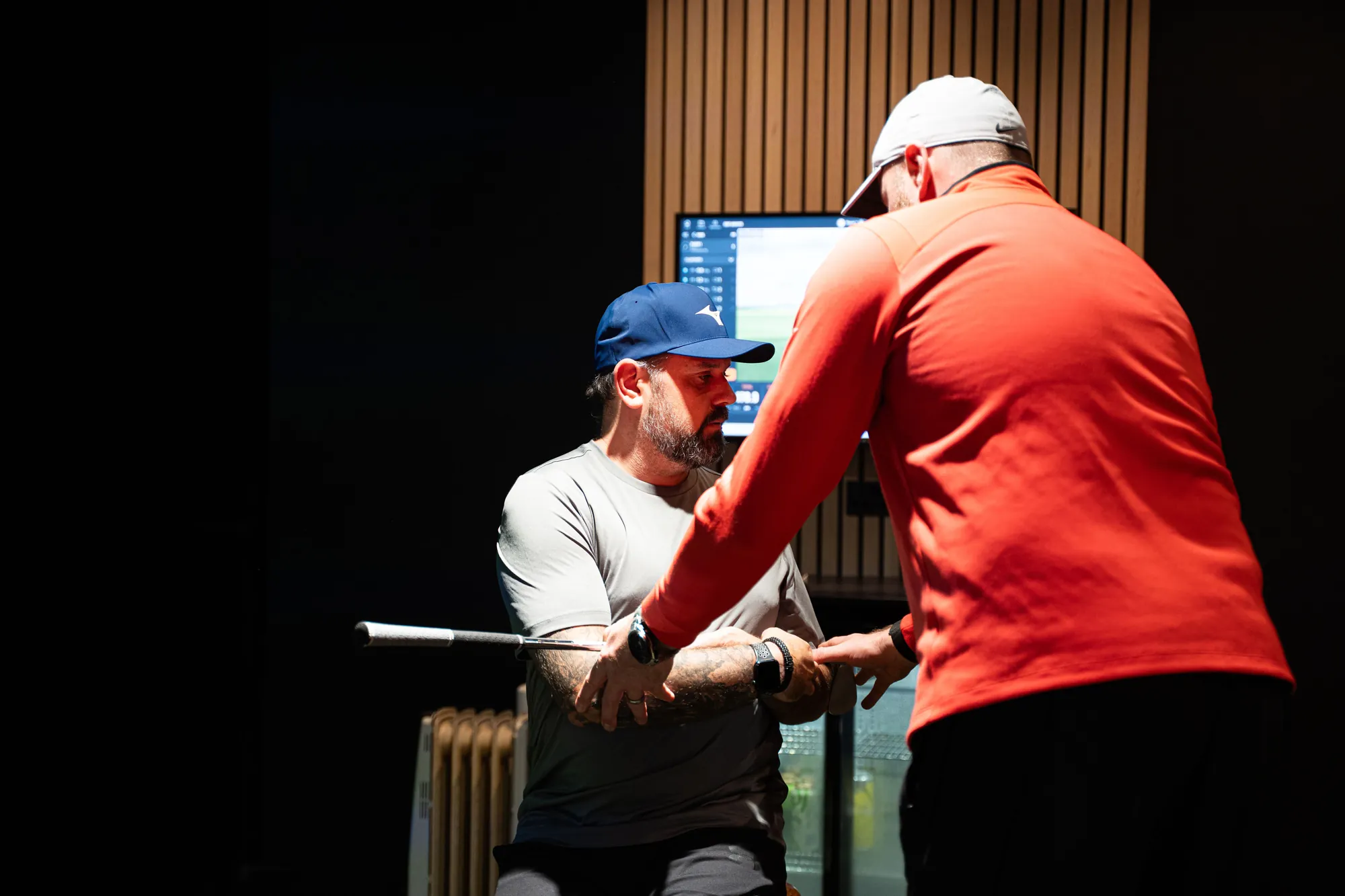
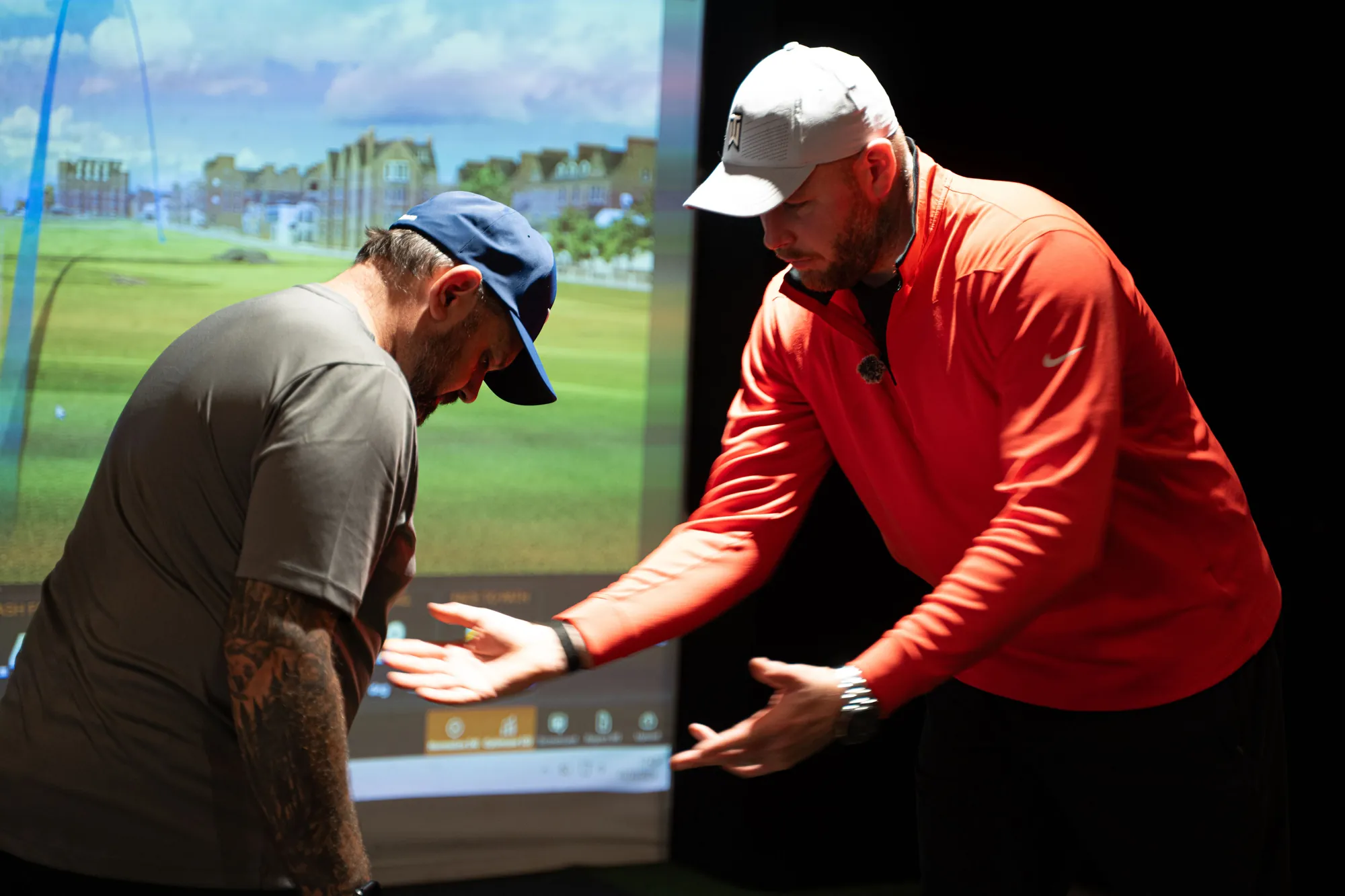
If you have ever wanted to change something in your swing, now is the time. A PGA Professional lesson with TrackMan data and video lets you find the cause of a fault, not just the symptom. A single one hour lesson is £55, and a block of five is £270, which suits a winter project. If you would like structure and video support between sessions, the monthly golf coaching programme is £60 a month.
Look after your body
Cold weather makes it more important to warm up, not less. Spend five minutes on a brisk walk, some arm and hip swings and half swings before you start hitting. Keep moving between shots rather than standing still. If you have any pain, injury or health condition, check with your doctor or physio before adding new exercise. Our guide to golf fitness exercises has a short routine you can start with.
Keeping the habit going
The hardest part of winter golf is not the cold, it is staying in the habit. Put practice in your diary like any other appointment, and keep sessions short enough that you finish wanting more. Twenty or thirty minutes with a clear job to do beats an hour of aimless hitting. Practise with a friend if you can, because a bit of company makes a dark evening much easier to face, and a friendly challenge keeps things lively.
One last tip: keep a simple notebook or phone note. After each session, write one line on what you worked on and one thing that felt good. Over a winter that becomes a record you can look back on, and it is far more motivating than trying to remember. It also helps a coach see what you have been doing between lessons, so the next session starts from where you really are, not from guesswork.
Winter checklist
- One swing change chosen, and written down.
- Carry distance known for every club.
- Two short game sessions a month at least.
- Putting practised little and often.
- Mobility work two or three times a week.
- A date in the diary to check your progress.
Come March, you will be the one who steps on to the first tee ready to play, rather than the one trying to remember how.
Want help putting this into practice?
Book a Session