A good driving range near Derby is one where you can see what your shots really do, practise on a decent surface, and pay a fair price without having to book. If a range gives you those four things, it will help you improve rather than just hit balls.
Not all ranges are the same, and a quick look at a few points before you go will save you wasted sessions. This guide is a plain checklist you can use to compare any range, wherever you live.
The hitting surface
Most ranges offer mats, grass, or both. Mats are reliable in wet weather and in winter, and they let you hit every day of the year. The downside is that a mat can forgive a poor strike, because the club bounces off the surface even when you hit behind the ball.
Grass is closer to the course. You feel a fat shot straight away, which is useful feedback. Ideally a range offers both, so you can use mats for volume and grass to test your strike properly.
Look at the condition too. Worn mats, a patchy tee line or heavily cut-up turf all make it harder to practise well.
Feedback on every shot
This is the biggest difference between a range that builds skill and one that just lets you swing. Without feedback you only have feel and the eye of whoever is standing behind you. Feel is often wrong.
A launch monitor such as TrackMan uses radar to measure what the club and ball did, then shows numbers like carry distance, ball speed and direction. If you are new to those numbers, our guide on how TrackMan works explains them in plain English.
When you compare ranges, ask one simple question: do I get data on every shot, or only in a special bay?
Targets, distances and layout
Practice is only useful if you are aiming at something. Check for these:
- Clear distance markers so you can learn how far each club carries.
- Defined targets or greens, not just an open field.
- Enough space between bays that you are not hitting into someone else's swing.
- A short game area for chipping and pitching, because a large share of the shots in a round are played close to the green.
A short game practice area is often what separates a range you visit once a week from one you can use to lower your scores.
Prices and how you pay
Ranges usually charge by the bucket or basket, and a larger basket should always cost less per ball. Check what the sizes are and whether there is a minimum. Also look at whether you need to book, and whether there is a time limit in the bay.
| Question to ask | Why it matters |
|---|---|
| Is there a small basket? | Good for a quick warm-up or a short session before work. |
| Does a bigger basket cost less per ball? | Better value if you practise for an hour or more. |
| Can I walk in? | Booking only ranges make spur of the moment practice harder. |
| Are balls and clubs hire included? | Matters if you are new and do not yet have a set. |
Weather, lighting and opening hours
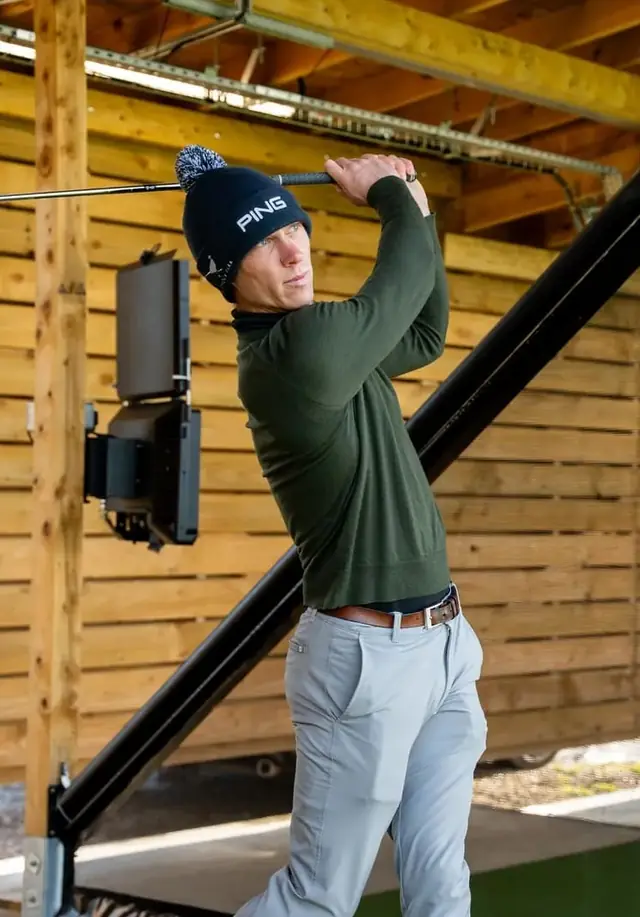
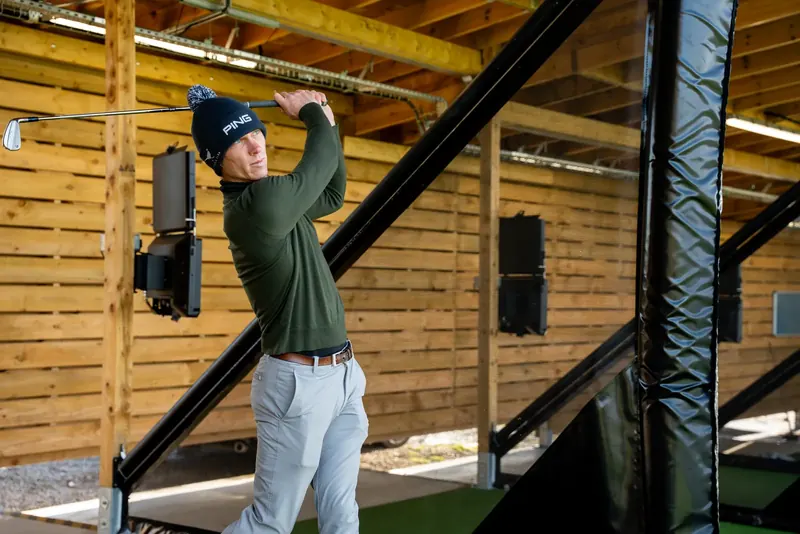
The best practice range is the one you actually use. A covered or enclosed bay means rain does not cancel your session, and good lighting means you can practise after work in the dark winter months. Check the opening hours, because a range that closes at 5pm is no use to someone finishing work at the same time.
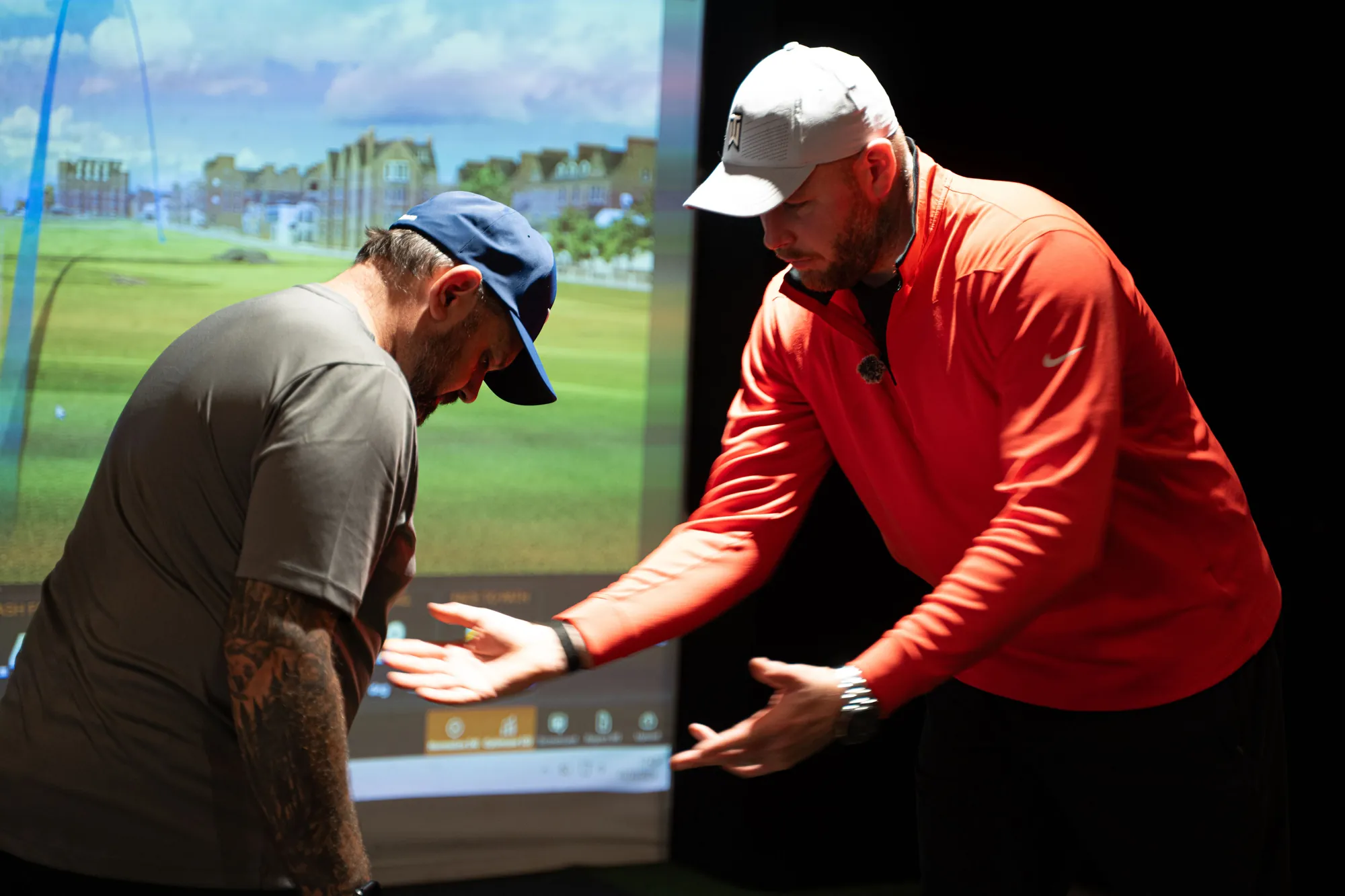
It also helps if there is an indoor option. Simulators let you keep going through bad weather, and many are connected to the same kind of launch data you get on the range. Our post on whether a golf simulator is worth it covers when indoor golf makes sense.
Coaching on site
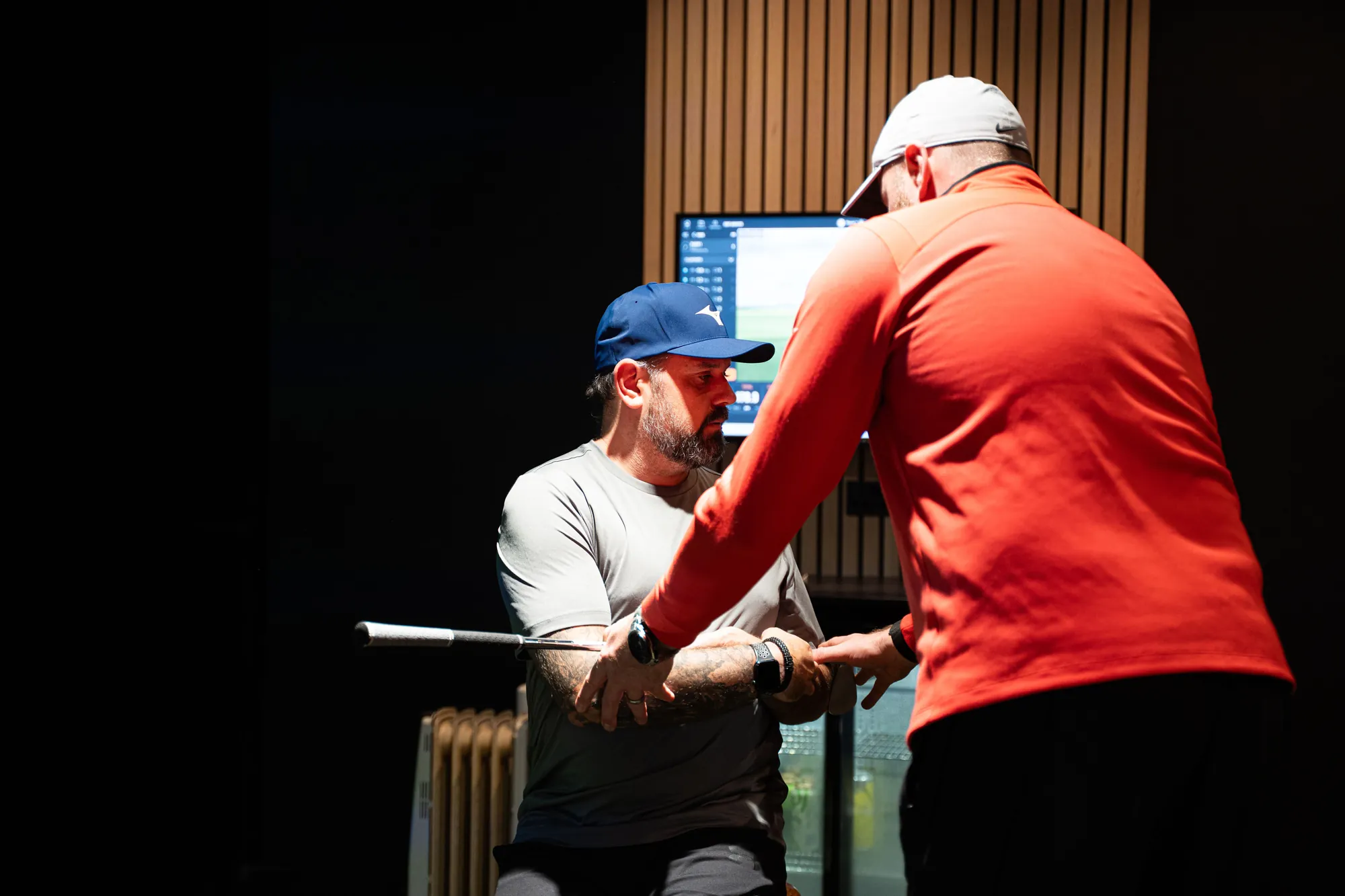
Hitting a lot of balls with a fault only makes the fault stronger. Having a PGA Professional on site means you can book a lesson, or ask for a quick check, when you hit a wall. Ranges with no coaching leave you on your own, and that can be fine for a good player but is hard for a beginner.
If you are starting out, look for a range that offers beginner golf lessons and provides clubs, so you do not need to buy anything before you know you enjoy it.
How to test a range on your first visit
Do not judge a range on the first five minutes. Buy a small basket and hit a few shots with a short iron, then a middle iron, then the driver. Notice how the surface feels, whether the numbers or targets help you, and whether you can see where each ball finished.
Then look around. Is it clean and well kept? Is the staff friendly to beginners? Do people look comfortable practising there, or is it hard to find space? A range that feels welcoming is one you will keep coming back to, and regular visits are what actually improve your game.
Finally, think about the journey. A range ten minutes closer is easy to visit, while one that takes an hour is a day out. Be honest about how often you will really go, and pick the one that suits your week.
A checklist you can take with you
- Mats and grass, in good condition.
- Data on every shot, not just in one bay.
- Clear targets and distance markers.
- A short game practice area.
- Fair prices, with a small and large basket.
- Walk in welcome, with the option to book.
- Lighting and cover for evenings and winter.
- A PGA Professional you can talk to.
Where Evolution Golf Academy fits
If you are looking at ranges near Derby, Evolution Golf Academy is at Ormonde Fields Golf Club, Nottingham Road, Codnor, about 20 minutes by car. It has a TrackMan driving range with TrackMan on every one of its seven bays, a grass driving range and a short game practice area. Baskets start at £4 for 30 balls and walk-ins are welcome, and it is open every day from 7am to 10pm. There is free parking on site. Compare it against your checklist, and then come and see for yourself.
You can find the full detail on the location page, including directions.
Want help putting this into practice?
Book a Session