There is no single number, but a sensible starting point is a block of around five lessons for a beginner, and one or two lessons for an improver with a specific problem. After that, a lesson every so often keeps you on track.
Anyone who tells you that you need exactly twelve lessons is guessing. The right number depends on where you are starting from, what you want, and how much you practise between sessions. This guide helps you work it out.
What decides the number
Four things matter most:
- Your starting point. A complete beginner has more to learn than someone who has played for years.
- Your goal. Enjoying a casual round is a different target from breaking 90 or playing competitively.
- How much you practise. A lesson only works if you practise what you were shown.
- Your body. Mobility, strength and any old injuries can slow or speed up a change.
Of these, practice is the one people underestimate. One lesson plus a good session on the range often beats three lessons with no practice at all.
A rough guide
These are sensible starting points, not rules. Your coach should adjust them once they see you swing.
| Where you are | A sensible start | Then |
|---|---|---|
| Never played | A block of five | A lesson every few weeks while you practise |
| Played a bit, no technique | Three to five lessons | A check up each season |
| Regular golfer with one fault | One or two lessons | Top up when it creeps back |
| Improving player with a big goal | A monthly plan | Review the goal every few months |
| Returning after a break | Two or three lessons | Rebuild, then play |
When a single lesson is enough
A one off lesson makes sense when you have a clear question. Perhaps you keep slicing your driver, you want a pre round tune up, or you have just bought new clubs and want to check your set up. A single lesson can give you a diagnosis and a drill.
It is also a good way to try a coach before you commit. If you want to know more about how to stop a slice, take a look at our guide on how to stop slicing first, and then book a lesson if it does not click.
Why a block works for most people
New skills need time and repetition. In the first lesson you learn something, you go away and practise, and then in the next you build on it and fix what went wrong. With a block, your coach can plan the order of things: grip and set up first, then the swing motion, then contact, then ball flight.
Booking a block also tends to be better value per lesson. At Evolution, a single lesson is £55 and a block of five is £270, which works out at £54 each. You can find more detail in our post on how much golf lessons cost in Derby.
When a monthly plan makes more sense
If your aim is long term improvement, a structured monthly programme can fit better than booking one lesson at a time. It keeps you accountable, gives you a plan, and means you are not deciding week by week whether to book. The monthly golf coaching at Evolution is £60 a month.
It suits golfers who know they will keep practising, and who want support between sessions rather than a single fix.
Signs you need another lesson
- The same fault keeps coming back after a couple of weeks.
- You are practising a lot but your scores are not changing.
- You have changed something and now hit it worse.
- You have a new goal, such as a handicap target.
- Something hurts when you swing. Stop and check with a doctor or physiotherapist first.
Signs you can stop, for now
You can pause lessons when you understand what you are working on, you can fix small errors yourself, and your practice is improving your results. Golfers often take a break, play and practise for a few months, and then return for a check up. That is a perfectly normal way to use a coach.
Be careful of lessons that never end. A good coach wants you to become your own coach in time.
How to make every lesson count
The lesson itself is only part of the work. A few habits help you get more from each one.
- Arrive with a question. Tell your coach what is bothering you, such as a miss to the right or a weak chip.
- Record the key points. Write down the drill and the feel, or ask for your swing video.
- Practise within a few days. A change fades quickly if you leave it for weeks.
- Practise slowly first. Make half swings that match the drill before you hit full shots.
- Come back with feedback. Tell your coach what worked and what did not.
If you are not sure how to structure your practice, our post on how to practise at a driving range gives you a simple plan that fits between lessons.
Do not forget the body
Sometimes the reason a swing change will not stick is not effort, but how your body moves. If you cannot rotate your hips or shoulders enough, no amount of coaching will let you make the same swing as a more mobile player. A movement screen finds out what your body can and cannot do. We explain more in our guide to what TPI golf is.
If you have any pain, or a health condition, speak to your doctor or a physiotherapist before you start a new routine. A good coach will always welcome that.
How Evolution approaches it
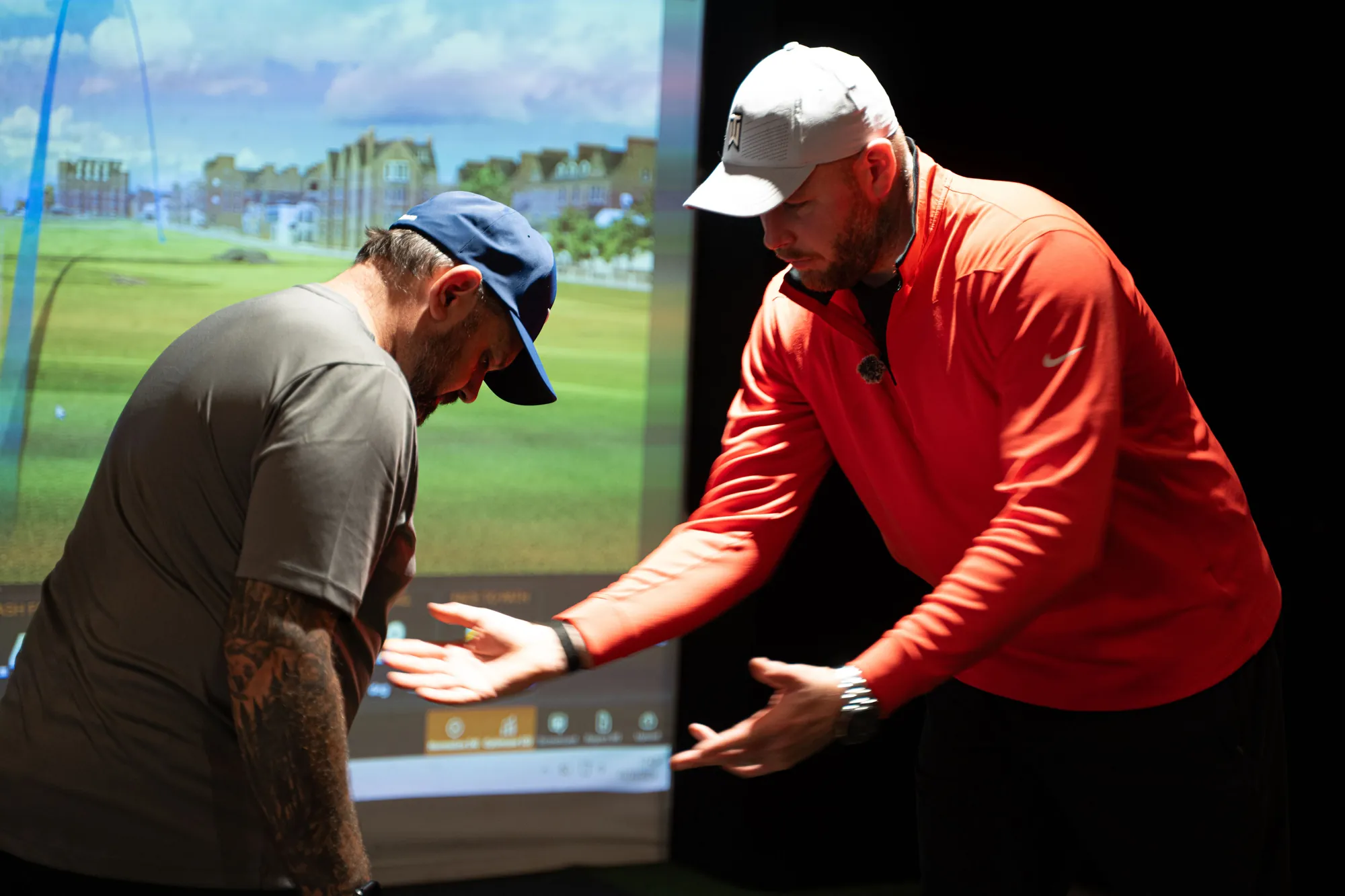
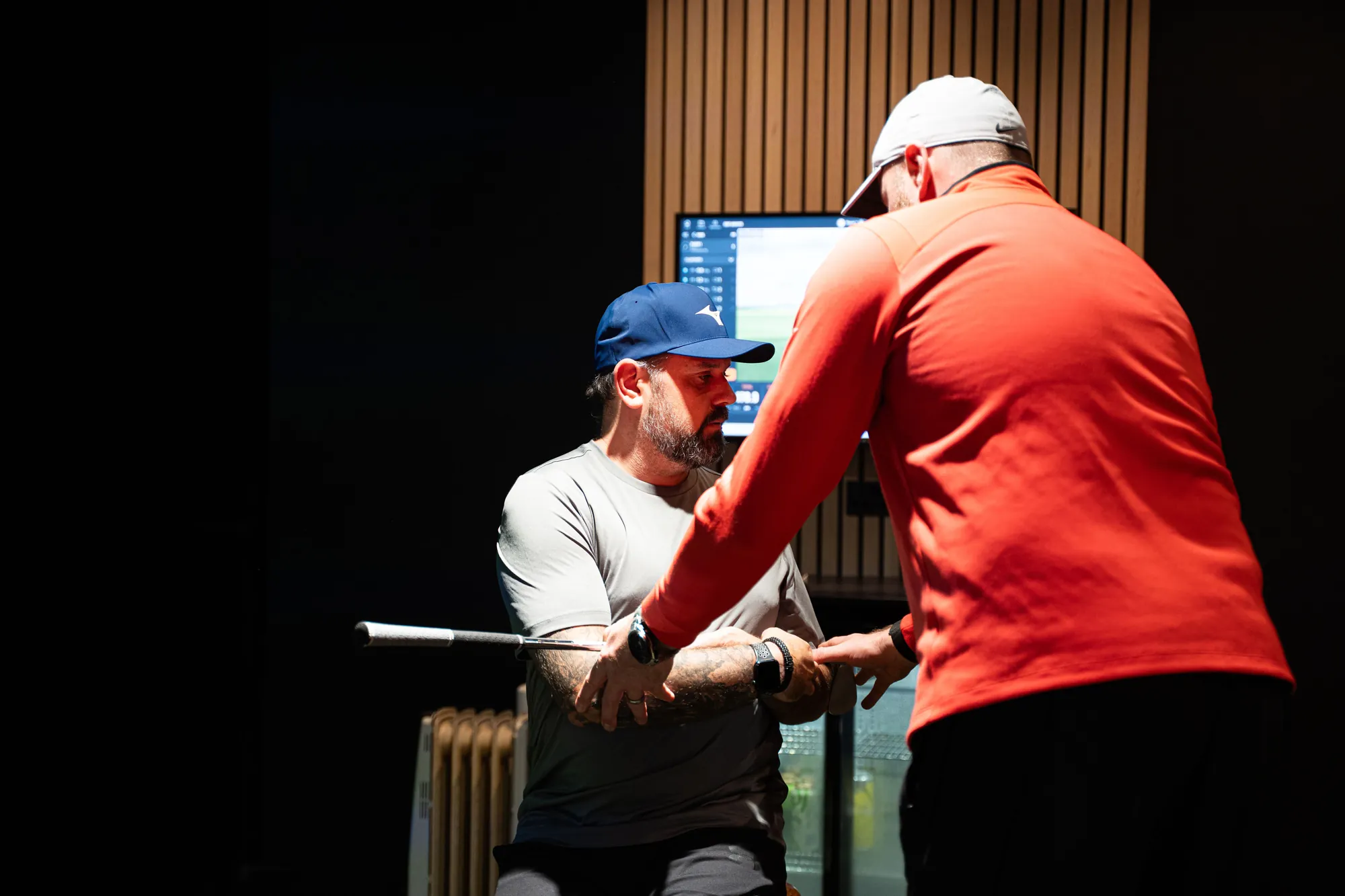
At Evolution Golf Academy, a one to one lesson with a PGA Professional runs for 60 minutes and includes TrackMan data and video analysis. Your coach starts with a swing assessment, and where it helps, a TPI movement screen and support from the fitness and physio team. See golf lessons in Derby for the full detail, or golf lessons in Nottingham if that is nearer. You can ask about the best option for you through the contact page.
Want help putting this into practice?
Book a Session